
Gravel Driveway Installation & Repair in Milledgeville, GA
Serving All of Baldwin County — New Builds, Repairs & Regrading.
Milledgeville Gravel handles new driveway construction, repair, regrading, and gravel delivery on rural and residential properties — from raw-land builds to pothole fixes, washout restoration, and full resurfacing across the county.
Get a Free Driveway QuoteHow much does gravel driveway installation cost in Milledgeville, Baldwin County?
Gravel driveway installation in Milledgeville costs $8 to $18 per linear foot, with complete new driveways ranging $2,000–$8,000+ depending on length and base condition. Baldwin County's red clay soil requires a compacted crusher run base to prevent settling and rutting. Rural properties average 300–800 feet; request a free assessment before committing to material and labor costs.
Your Gravel Driveway — Built for Long Runs and Red Clay
Milledgeville Gravel was built for the long driveways and red clay conditions that are normal here — not the short suburban jobs that most contractors prefer. We assess before we quote and build driveways that hold up through Georgia summers.
Driveway length, base condition, slope, and drainage all affect the right approach and final cost. We evaluate your property before quoting — no ballpark guesses.
We don't skip the base layer and drop surface stone on soft clay. Every new installation uses a properly compacted crusher run base — the foundation that determines how long the driveway lasts.
Rural driveways in this area regularly run 300 to 800 feet. We size equipment and material orders for the long runs that suburban contractors won't touch.
Every installation includes proper crown grading to move water off the surface and away from your home or structure — a step that separates a lasting driveway from one that washes out every season.
Local Driveway Conditions
Red clay soil compacts poorly under gravel without preparation. Clay stays wet after rain, softens under load, and allows surface gravel to sink — which is why base layer compaction isn't optional here. It's the job that prevents every problem that follows.
Driveway length, existing base condition, access width, slope, and drainage all affect material quantity and equipment requirements. A quote built without a site assessment is a guess — and rural property jobs frequently have site variables that change costs significantly.
A properly installed gravel driveway has three elements: a compacted base layer, a correctly graded surface with drainage crown, and appropriately selected surface material. A gravel drop is just stone placed on existing ground. Only one of these lasts through a winter and spring here.
Driveway Services in Milledgeville, GA
Potholes rutting up after every storm? New property access needed? Just need gravel where it's supposed to go? We cover every stage of driveway work — from raw-land builds to full restoration.
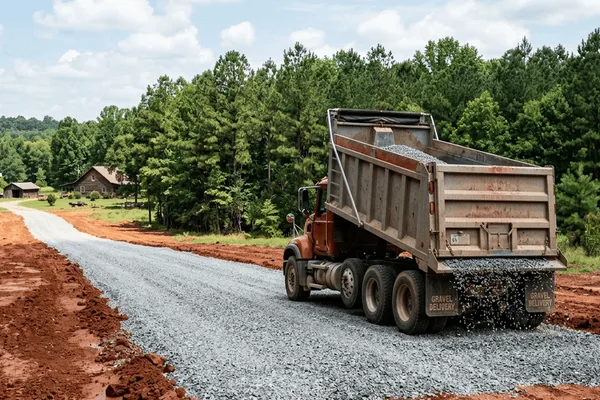
Gravel Driveway Installation
New driveway construction from scratch: base prep, compacted crusher run base layer for red clay, surface gravel, and drainage crown grading. Sized for long rural driveways up to 800+ feet.
Learn More →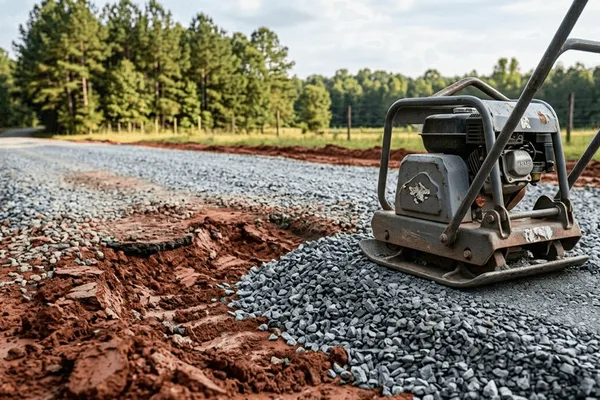
Gravel Driveway Repair
Pothole filling, rut repair, and washout restoration — done right. We address the clay base failure beneath potholes — not just the surface — to prevent the same spot from failing again.
Learn More →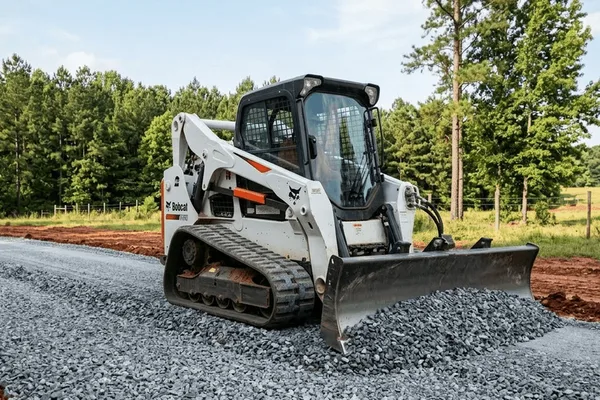
Driveway Grading
Regrading and leveling worn or rutted driveways to restore the drainage crown that heavy rain demands. Proper slope keeps water off the surface and stops the rut cycle before it starts again.
Learn More →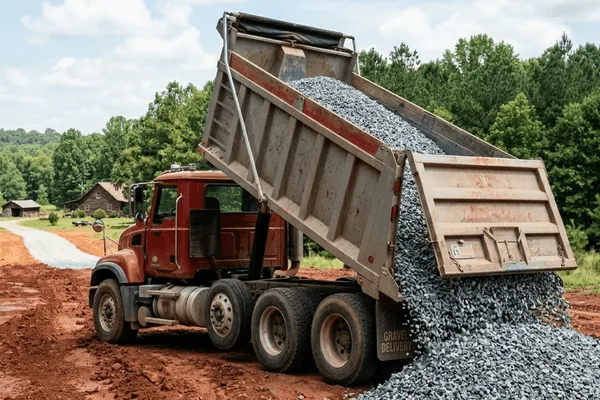
Gravel Delivery & Spreading
Crusher run, #57 crushed stone, or pea gravel delivered to your property and spread evenly. Material sized to the job — no over-ordering, no guesswork on tonnage.
Learn More →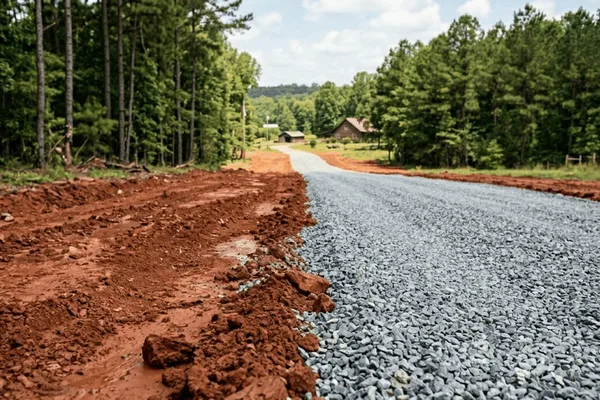
Driveway Restoration
Full resurfacing for driveways that have lost most of their surface material. New base work and fresh surface gravel applied to spec — returning a deteriorated track to a functional, properly graded driveway.
Learn More →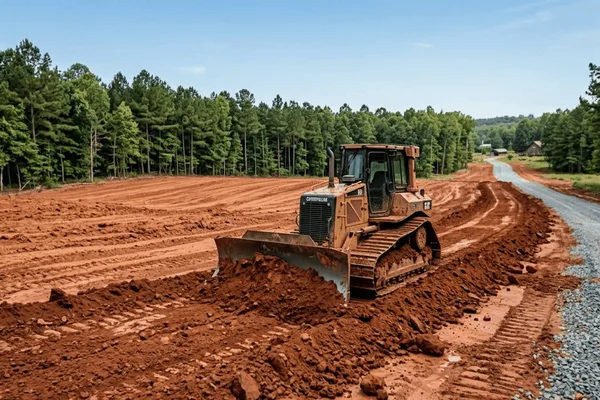
Land Grading
Site grading for new driveway access routes where no driveway currently exists. Ideal for raw parcels being prepared for residential construction, agriculture, or rural access roads.
Learn More →Milledgeville, Hardwick, and surrounding rural roads
Base compaction and prep matched to local red clay soil conditions
We deliver gravel and spread it. One contractor, start to finish
Submit a request anytime. You'll receive follow-up to schedule a property assessment
What Makes a Gravel Driveway Last in Middle Georgia
A minimum 4-inch compacted crusher run base separates the surface gravel from the clay subgrade. Without this layer, surface gravel sinks directly into soft clay — the root cause of most driveway failures in middle Georgia.
The driveway surface must arch slightly in the center so water runs off to the sides. Without a drainage crown, middle Georgia's summer storms channel water straight down the length of the driveway — cutting ruts and washing gravel to the edges with each storm.
Crusher run goes down first as the structural base — its stone-dust fines lock it into a dense mat. Clean #57 stone goes on top as the riding surface, providing traction and drainage. Using only one material type throughout is a common installation shortcut that shortens driveway life significantly.
Signs Your Driveway Needs Professional Attention
- Potholes and ruts that refill with water after every rain
- Gravel has washed to the edges or into the yard, leaving a dirt track
- Standing water on the driveway surface after storms
- Soft spots where vehicles leave deep tire impressions
- New property access needed where no driveway currently exists
- Driveway has not been regraded or topped up in 3+ years
- Base failure visible — gravel sinking into soft clay underneath

Common Questions About Gravel Driveways
How much does a gravel driveway cost?
Gravel driveway installation typically costs between $8 and $18 per linear foot for a standard residential driveway, with full installations ranging from $2,000 to $8,000 or more depending on length, base condition, and gravel type. Rural driveways in middle Georgia commonly run 300–800 feet, so per-foot pricing is the most accurate way to estimate. Shorter repair jobs and pothole filling start much lower — typically $200 to $800 depending on scope.
How deep should a gravel driveway be?
A properly built gravel driveway requires 4 to 6 inches of compacted crusher run base plus 2 to 3 inches of surface gravel for a total depth of 6 to 9 inches. Red clay soil does not drain naturally, so adequate depth and proper base compaction are essential — driveways built on soft clay without a compacted base will sink and rut within one or two seasons.
What is the best gravel for a driveway?
Crusher run is the best choice for driveway base material because its mix of crushed stone and stone dust compacts tightly and resists shifting in clay soil. For the surface layer, #57 crushed stone provides good traction and drainage without tracking indoors. Pea gravel is sometimes used for aesthetic driveways but is not recommended for high-traffic rural driveways in middle Georgia where it tends to scatter and migrate.
How do you fix potholes in a gravel driveway?
Proper pothole repair starts with clearing loose material from the depression, addressing any soft clay base underneath, adding fresh crusher run or compactable base material, compacting firmly, then topping with surface gravel to match the surrounding grade. Simply dumping gravel into a pothole without addressing the base or compacting the fill is the most common cause of repeat failures — potholes refill with water and deepen further within a few months.
Is a gravel driveway cheaper than concrete?
Gravel driveways are significantly less expensive than concrete, typically costing $2,000 to $8,000 for a full rural driveway installation versus $15,000 to $40,000 or more for the same length in concrete. Gravel also has lower repair costs — a concrete driveway that cracks or heaves requires partial slab replacement, while a gravel driveway can be re-topped or regraded at a fraction of the cost. For long rural driveways in middle Georgia, gravel is almost always the practical choice.
How do you stop gravel driveway erosion?
Gravel driveway erosion is best prevented through proper crown grading — shaping the driveway surface so the center is slightly higher than the edges, directing water to run off to the sides rather than channeling down the middle. Heavy rain in middle Georgia accelerates washout on driveways without this crown, especially on slopes. Installing drainage swales alongside the driveway and using geotextile fabric under the base layer also significantly extend the time between required top-dressings.
Who installs gravel driveways near me?
Milledgeville Gravel installs and repairs gravel driveways throughout the county, serving Milledgeville, Hardwick, and surrounding rural properties. We handle everything from new driveway construction to pothole repair, regrading, and full-surface restoration. Submit a quote request and we will follow up to schedule a property assessment.
Can a gravel driveway be plowed?
Gravel driveways can be plowed during winter weather events, though it requires setting the plow blade slightly higher than a paved surface to avoid scraping up gravel. Middle Georgia's winters are generally mild, but ice events do occur and gravel driveways handle them well — gravel provides more traction on ice than smooth concrete or asphalt. A properly graded driveway with good crown drainage will also shed ice and standing water faster.
How long does a gravel driveway last?
A properly installed gravel driveway with a compacted crusher run base and adequate surface depth can last 20 to 30 years with routine maintenance. Surface topdressing every 3 to 5 years and periodic regrading to restore the drainage crown are the primary maintenance requirements. Driveways that skip the base layer or are installed on uncompacted clay soil typically begin showing significant deterioration within 2 to 4 years, especially on longer rural runs.
What is crusher run and is it good for driveways?
Crusher run is a processed gravel material consisting of crushed stone mixed with stone dust fines — it compacts into a dense, stable surface that bonds well under load. It is the preferred base material for gravel driveways in middle Georgia because it locks together rather than shifting or migrating the way round stones do. Crusher run is used for the base layer; a clean aggregate like #57 stone is then applied on top for the riding surface.
How do you fix ruts in a gravel driveway?
Ruts in gravel driveways are corrected by first identifying the cause — most ruts result from base failure where the clay subgrade has softened and allowed the gravel to sink into it. Repair involves removing loose gravel from the rutted area, compacting or stabilizing the clay base, adding fresh crusher run base material and compacting in lifts, then resurfacing with gravel to the correct grade. Ruts that simply get filled with loose gravel without addressing the base will return within one to two rain events.
How wide should a gravel driveway be?
A single-vehicle gravel driveway should be at least 10 to 12 feet wide, while a two-vehicle or farm-use driveway should be 14 to 16 feet wide to allow comfortable passage and vehicle turning. Rural properties with regular truck or equipment traffic often benefit from a 16-foot width, particularly on longer runs where passing room becomes important. Turnouts at key points along very long driveways are also worth considering.
What size gravel is best for a driveway?
#57 stone (3/4-inch crushed granite or limestone) is the most common and practical surface gravel for residential driveways — it provides good drainage, packs moderately firm under traffic, and is widely available throughout middle Georgia. Smaller sizes like #89 stone can work for finish layers but are more prone to tracking. Larger sizes like #4 stone are better suited to base reinforcement than surface use. Crusher run, which spans multiple size gradients, is the standard choice for the base layer.
Does a gravel driveway need a base layer?
Yes — a gravel driveway requires a properly compacted base layer, especially in red clay soil areas. Without a base, surface gravel sinks directly into the soft clay underneath, creating ruts and potholes rapidly. A 4-to-6-inch compacted layer of crusher run separates the surface gravel from the clay, provides structural support, and dramatically extends the life of the driveway. Skipping the base layer is the single most common reason gravel driveways fail prematurely in middle Georgia.
What are the pros and cons of a gravel driveway?
The main advantages of a gravel driveway are significantly lower installation cost versus concrete or asphalt, easier repair when sections deteriorate, good natural drainage in storm events, and suitability for long rural runs that would be prohibitively expensive to pave. The primary drawbacks are the need for periodic topdressing every few years, gravel migration over time at edges and entry points, and the occasional need for regrading after heavy storms. For most rural properties in middle Georgia, the cost advantage far outweighs the maintenance requirements.
How do you keep gravel from washing away on a driveway?
Preventing gravel washout starts with proper crown grading — the driveway surface should arch slightly in the center so water runs to the edges rather than channeling straight down the length. Edge containment using compacted berms or border stone slows migration at the sides. On sloped driveways, cross-drain culverts at appropriate intervals redirect water before it builds velocity. Geotextile fabric under the base layer also helps lock material in place. Driveways without crown grading are the most vulnerable to Georgia's heavy summer rain events.
How often does a gravel driveway need to be regraded?
Most gravel driveways benefit from professional regrading every 2 to 4 years depending on traffic volume, driveway length, and drainage conditions. Heavily used farm or equipment driveways may need regrading annually, while low-traffic residential driveways can often go 4 to 5 years between full regrades if the base is solid and the crown is intact. Signs that regrading is overdue include standing water after storms, visible ruts, or gravel that has migrated to the edges leaving a worn dirt track in the center.
Can you install a gravel driveway on a slope?
Yes — gravel driveways can be installed on slopes with proper grading technique. The key is establishing a cross-slope crown so water sheds to the side rather than running straight down the grade, which accelerates erosion. Steeper slopes may require drainage swales alongside the driveway, cross-drain culverts at grade breaks, and a coarser surface gravel that resists migration. Middle Georgia's heavy summer rain makes drainage planning especially important on any sloped driveway installation.
How much gravel do I need for a driveway?
A standard rule of thumb is approximately 1 ton of gravel per 100 square feet at a 2-inch depth. For a typical rural driveway — 200 feet long by 12 feet wide — that is 2,400 square feet, requiring roughly 24 tons of surface gravel plus base material. Because area driveways are often 300 to 800 feet long, material quantities add up significantly; requesting a free property assessment gives you accurate tonnage before committing to a budget.
What is the difference between #57 stone and crusher run?
#57 stone is a clean, single-size crushed aggregate (approximately 3/4 inch) that drains freely and provides good surface traction for driveway use. Crusher run is a blend of crushed stone in multiple sizes mixed with stone dust fines — because of the fines, it compacts into a dense, solid mass and is ideal for base layers. The two are used at different depths in a properly built gravel driveway: crusher run goes down first as the structural base, and #57 stone (or similar clean aggregate) is applied on top as the riding surface.
What is the best gravel for red clay soil in Georgia?
Crusher run is the best base material for driveways built on red clay soil — its mix of crushed stone and stone dust fines compacts tightly and resists the heaving and shifting that red clay causes when wet. For the surface layer, #57 crushed granite or limestone provides good traction and drains freely without tracking into the clay below. Georgia red clay soil requires proper base preparation of at least 4 to 6 inches of compacted crusher run before any surface gravel is applied — driveways built directly on red clay without this base will sink and rut within one or two seasons.
How long does gravel driveway installation take?
A typical gravel driveway installation takes 1 to 3 days depending on driveway length, site preparation required, and weather conditions. A standard 200-foot residential driveway with minimal grading can often be completed in a single day once materials are on site. Longer rural driveways of 500 to 800 feet, or installations that require significant base work on soft clay, may take 2 to 3 days to allow for proper compaction between layers.
Do I need to clear land before installing a gravel driveway?
Yes — any trees, brush, stumps, or heavy vegetation in the driveway path must be cleared and the root systems removed before gravel installation can begin. Organic material left under a gravel base will decompose over time, creating voids that cause the surface to sink and develop potholes. For properties that need clearing before driveway work, Milledgeville Land Clearing handles site clearing and access route preparation throughout Baldwin County.
Service Area — Baldwin County and Surrounding Communities
We handle driveway installation, repair, and regrading throughout the county — serving Milledgeville and every rural road in the area.
Get a Free Driveway Quote in Milledgeville
No middlemen. No dispatch center. Submit your quote request and we'll follow up to schedule a free property assessment — driveway length, base condition, and access all factor into your estimate for area properties.
Request Received!
We'll be in touch promptly to schedule your free property assessment.
Milledgeville & Baldwin County, Georgia
Proudly serving Milledgeville and surrounding Baldwin County communities. Learn more about City of Milledgeville and Baldwin County, Georgia.